
Living tribal culture, on its own proud terms.
From the Hornbill Festival to the headhunter villages of Mon and the green slopes of Khonoma, Nagaland is a state defined by its people.
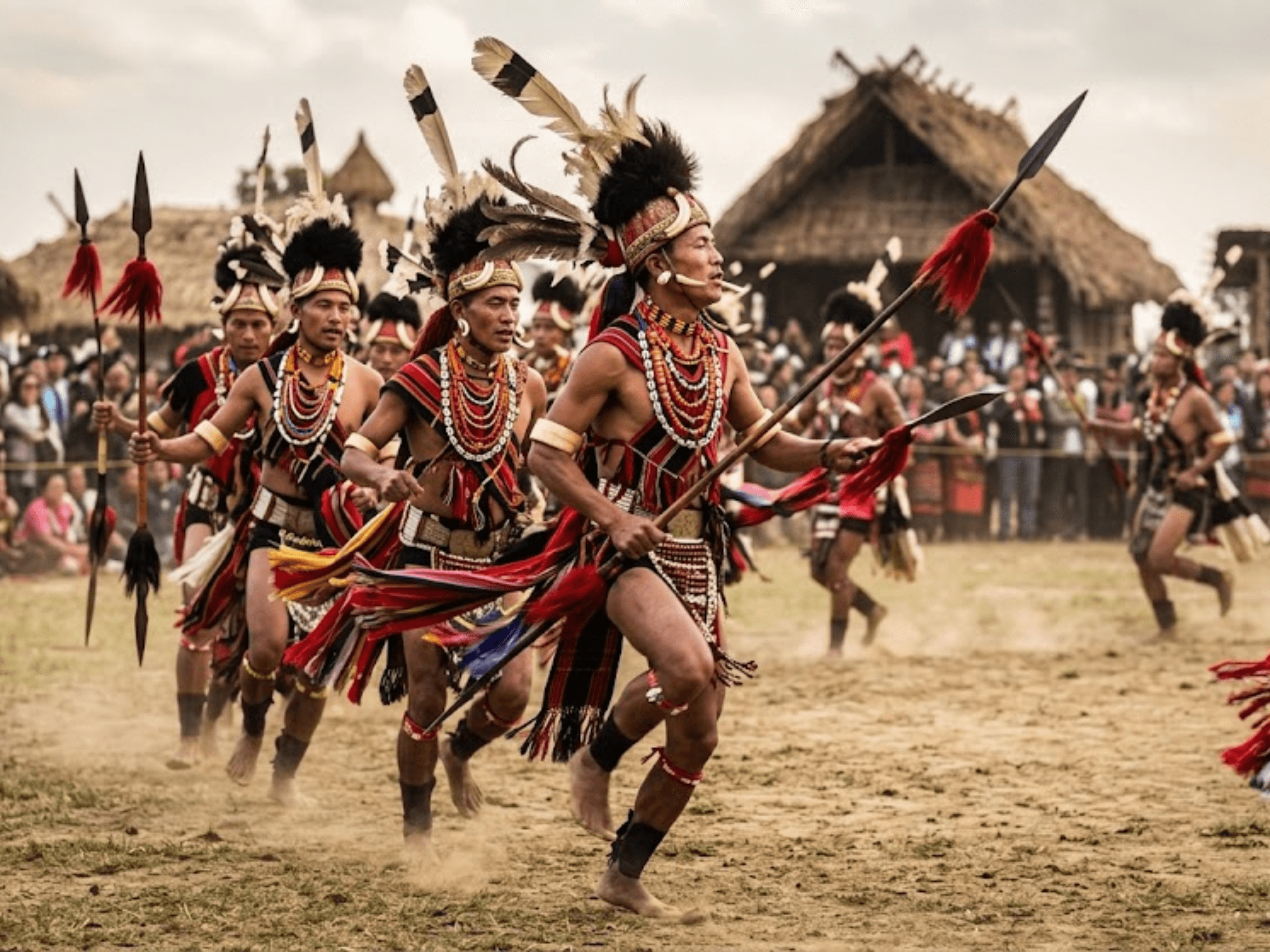
"Hornbill Festival performers in full traditional Naga dress, colour and movement, candid."
Nagaland is culture you can feel in the air. Ridge-top villages, fierce pride in tribal identity, and the Hornbill Festival, one of the most spectacular gatherings of indigenous culture anywhere in the world. Nagaland is home to sixteen major tribes, each with its own language, dress, and traditions, and the culture here is not a museum piece. It is lived, loudly and proudly, every day. There is no better window into it than the Hornbill Festival each December, when the tribes gather at Kisama in a riot of dance, music, food, and craft that has to be seen to be believed. Beyond the festival, Nagaland rewards the curious. The village of Khonoma is India's first green village. Mon, in the far north, is the land of the former headhunting tribes, where the Angh's house and the great log drums tell a history found nowhere else. This is a state for travellers who come to meet people, not just see places.
What you will see
Take a slow, thorough walkthrough of these local treasures, curated and managed wholly by homegrown guides.
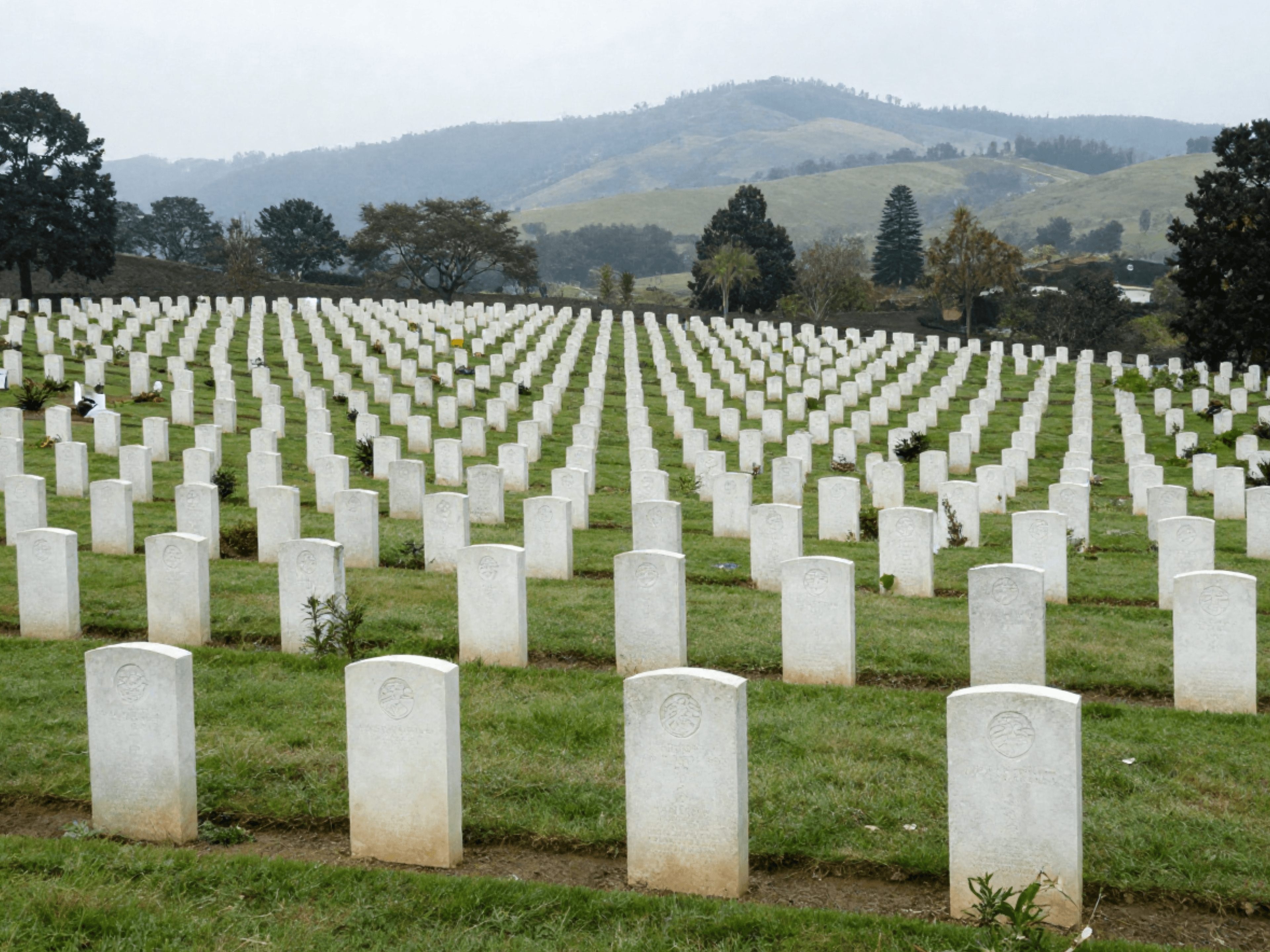
"Rows of headstones at the Kohima War Cemetery on a terraced green hillside."
Kohima
The capital, and a place of real weight. The Kohima War Cemetery commemorates one of the turning-point battles of the Second World War, and the nearby Kisama Heritage Village is the permanent home of the Hornbill Festival. A thoughtful, moving introduction to the state.
Khonoma and Dzukou Valley
Khonoma is the model green village, famous for its conservation ethic and terraced fields. From near here, the trek into the Dzukou Valley, a rolling sea of seasonal flowers, is one of the most beautiful walks in the Northeast.
Mon and the north
The heartland of the Konyak people, the former headhunting tribe. In villages like Longwa, which straddles the India-Myanmar border, you can still meet the last generation of tattooed elders and sit in the Angh's house. A rare and humbling experience, approached with deep respect.
The wider state
Mokokchung, the cultural hub of the Ao people, Dimapur with its ancient Kachari ruins, and the quieter districts of Phek and Wokha all reward travellers who want to go past the festival and into everyday Naga life.
🌸 Signature experiences
- ✓Experience the Hornbill Festival at Kisama (December)
- ✓Pay respects at the Kohima War Cemetery
- ✓Trek the flower-filled Dzukou Valley
- ✓Meet Konyak elders in the villages of Mon
- ✓Walk the terraced fields of Khonoma green village
🗺️ Ways to travel here
- ➔All-Nagaland grand tour — Kohima to Mon, the most complete cultural journey through the state.
- ➔Hornbill Festival tour — the December gathering, planned early because demand is high.
- ➔Naga tribal heritage tour — a deeper journey into the tribes, their villages, and their histories.
- ➔Adventure tour — the Dzukou trek and the green hill country.
- ➔Cultural and educational tours — for groups and students studying indigenous culture.
Culture seekers, photographers, and travellers who light up at the chance to genuinely meet a people rather than just visit a place. Book very early for festival season.
“The Hornbill Festival was overwhelming in the best way, but it was the quiet afternoon we spent with an elder in Mon that I think about most. You cannot get that from a guidebook.”